The journal
September 24, 2026
5 min read
The Battle for Little Cottonwood
Inside the gondola fight dividing Utah's ski country, told the way a 21-year canyon local hears it.
The Little Cottonwood Canyon gondola fight is the biggest transportation argument in Utah's ski country, and it is about far more than a cable. This piece walks both sides fairly: why UDOT picked an eight-mile gondola in 2023, who is suing to stop it, the honest case for the ride, and what the 2026 land deal and the 2028 bus-and-toll plans mean. After 21 years selling homes from Cottonwood Heights to Alta, I read it as a home-buying signal as much as a transit story.
01 / The bottleneck
The road that grinds to a halt.
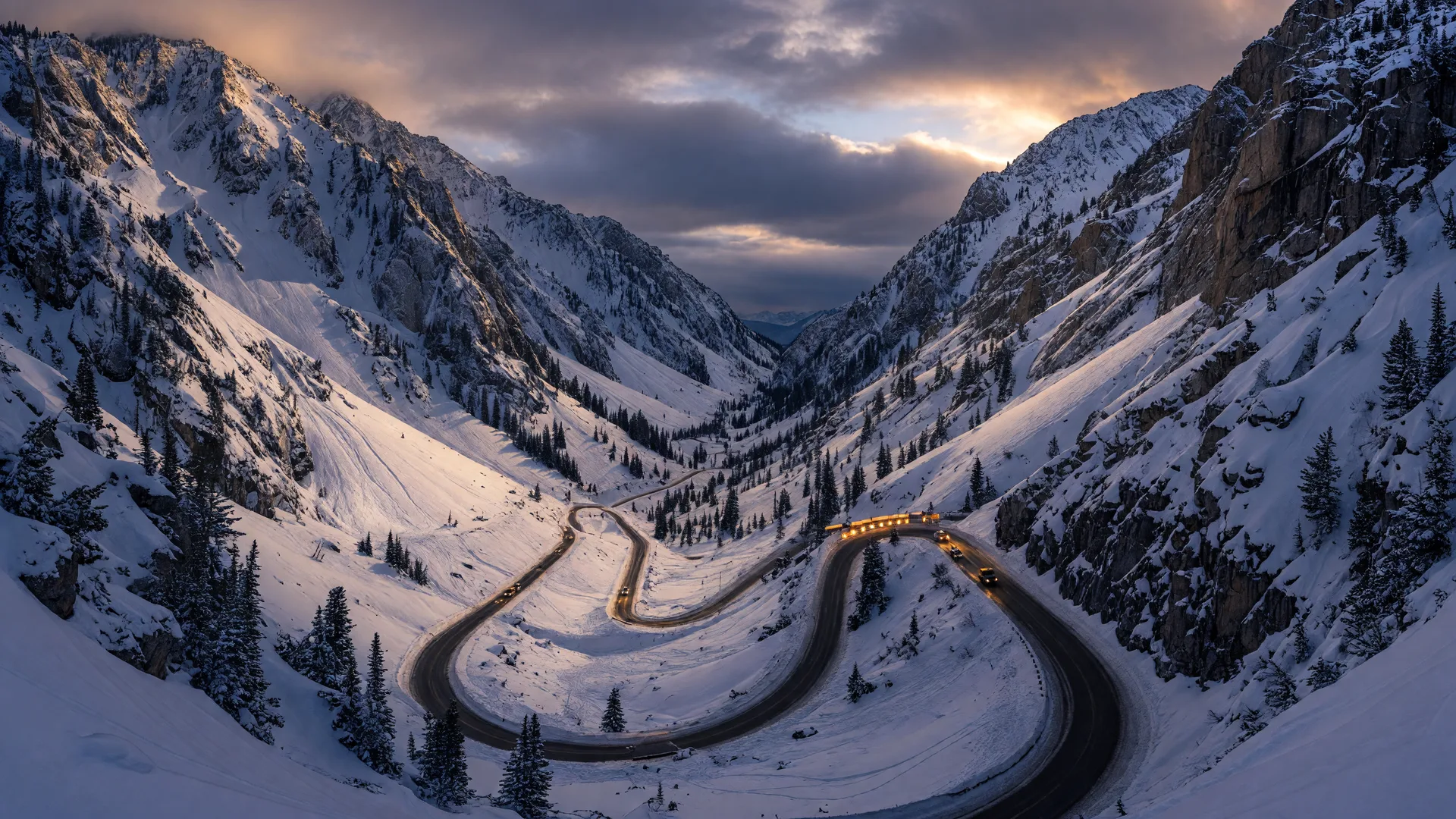
State Route 210 is the only road up to Alta and Snowbird, and UDOT treats it as one of the most avalanche-prone highways in North America: 64 slide paths, more than half of the road threatened, and most of the road through Alta and Snowbird itself inside avalanche terrain.
On a powder morning, that two-lane dead-end road turns into the "red snake" of brake lights, stacking for hours. When the mountain needs work, UDOT closes the road for avalanche control, and interlodge can pin guests and employees up-canyon for days; in February 2023, an avalanche cycle kept people stuck for five.
02 / The 2023 decision
An eight-mile answer.
In July 2023 UDOT released its record of decision, which the Deseret News covered as the moment Utah's ski country officially split in half: an eight-mile tricable gondola from a base near the canyon mouth, up to Alta and Snowbird, with enhanced bus service phased in first.
The numbers matter. Cabins hold up to 35 people and arrive every two minutes, moving roughly 1,050 people an hour; the ride takes about 37 minutes to Alta. Cost is where the sides part: roughly $550 million for the gondola alone, past $729 million once parking, tolling, and road work join it, and opponents argue the real number approaches a billion.
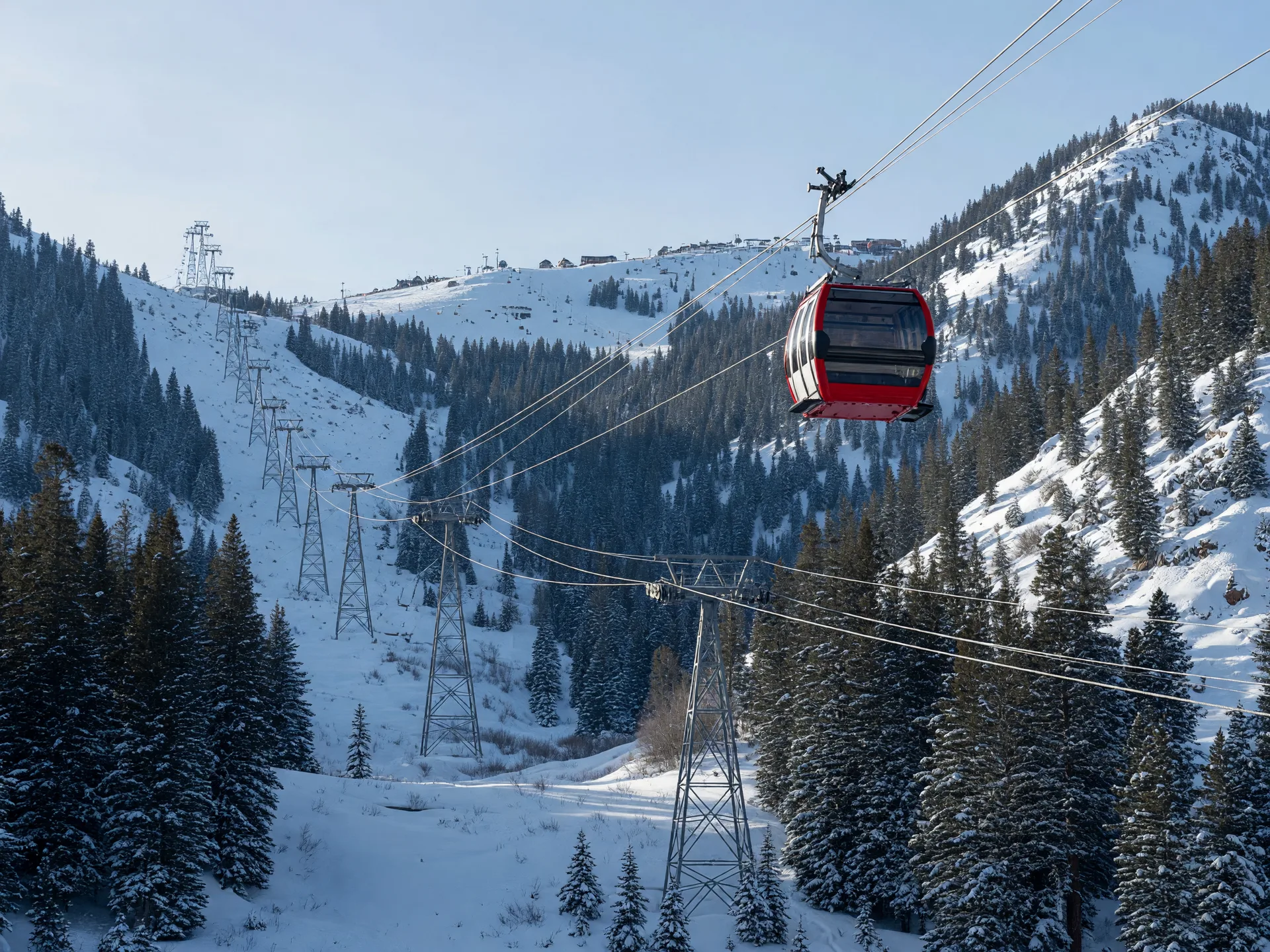
A 35-person cabin, every two minutes, higher than the traffic.
03 / The opposition
Who is suing, and why.
The opposition: Save Our Canyons; Friends of Alta and Canyon Guard; and Salt Lake City, Sandy City, and the Metropolitan Water District of Salt Lake City and Sandy. Their federal suits, filed in December 2023, were consolidated in April 2024, and as of Save Our Canyons' spring 2026 campaign update, the case is still in administrative-record review. The core concerns: a watershed supplying more than 60 percent of the valley's drinking water; a gondola that would not run during avalanche control; towers up to 260 feet tall threading terrain skiers, climbers, and wildlife already claim; and cost that keeps growing.
04 / The case for it
The limits of busing.
The gondola's case is easiest to understand on the worst day. Enhanced bus service, the phase UDOT wants running by 2028, shares the same two lanes: a coach sits in the same red snake and stops for the same avalanche closures.
That is why UDOT's analysis chose the gondola for the highest travel reliability: an independent line that does not slide off the road and keeps moving people when the canyon road is closed but the resorts are open. Even with snowsheds and tripled buses, the road scenario still carries an estimated 11 hours a year of full closure versus about 56 today.
05 / The 2026 turn
An eight-million-dollar question.
In June, the Salt Lake Tribune reported that UDOT closed on an $8 million purchase of an eight-acre parcel near the canyon mouth, funded by the Corridor Preservation Fund, as a potential base-station site. The catch: the gondola is still unfunded and roughly 15 years from construction, and Cottonwood Heights Mayor Gay Lynn Bennion told the Transportation Commission the land is worth closer to $4.5 million, about half of what the state paid.
Meanwhile, KUER reported UDOT's phase-two timeline: by 2028, enhanced buses every 10 to 15 minutes from a new hub at the canyon base, eventually every five minutes to each resort, plus tolls on winter congestion days. One project manager conceded that if busing and tolling clear the canyon, it could change the calculation for the gondola altogether. Right now the project is less a construction plan than a land bank and a clock.
06 / The home-buyer's read
The canyon is the neighborhood glue.
The honest read from the bench: nobody I know thinks this is over. Parking rules at the canyon mouth change nearly every season, and locals watch them the way other cities watch sports. After 21 years of showings from Cottonwood Heights to Alta and Snowbird, I can tell you the canyon is the point: the powder days, the closures, the debate, all of it is why people buy here, and this fight is about what the next 30 years of canyon mornings look like.
When you are ready to weigh a bench address or a canyon-view retreat, bring the wishlist. I will show you the canyon and the neighborhoods behind it, and tell you what the traffic report really means for your alarm clock.
Want the local read on your move?
I have sold the canyon's doorsteps for 21 years.
From Cottonwood Heights to Alta and Snowbird, the conversation is free and the intel is real. Reach out and bring the wishlist; leave with a plan for your corner of the Wasatch.